

Many believe that Manchester’s development and establishment were driven by the rapid growth of the city’s industry. However, it’s important to note that the financial sector, particularly banking, played an equally significant role in the city’s prosperity. The rise of banking in Manchester was crucial in shaping its economic success, and the establishment of its first banks marks a fascinating chapter in its history. Next on manchester1.one.
The Formation of Banking in Manchester
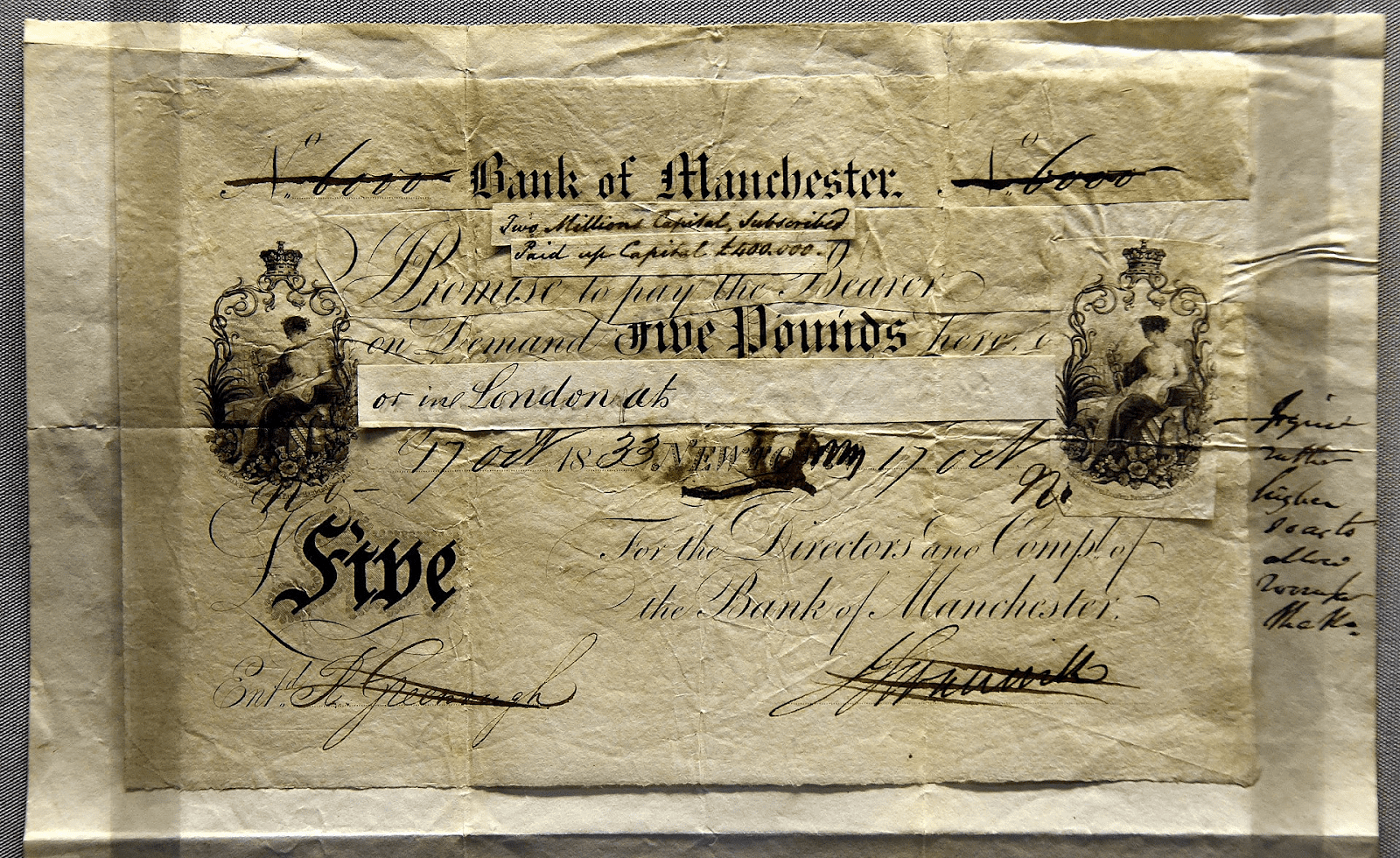
Undoubtedly, Manchester’s industrial sector was central to its growth and establishment. The city’s burgeoning industry greatly influenced the creation of its banking institutions.
Most of the money flowing through Manchester came from its industrial sector, including the factories and mills located throughout the city. The city housed major enterprises in cotton production and other industries, making Manchester not only the industrial hub of Britain but also a key trading centre where merchants would gather to sell their goods. These traders frequently met twice a week at the Royal Exchange building, which was the largest trading floor in the world at the time. Transactions were conducted quietly, involving only the buyer and seller. Demonstration and packaging rooms were often the warehouses of local factories, while railway company warehouses were situated near stations for swift shipping and transportation.
It is worth noting that a portion of the city’s revenue also came from the slave trade. Local merchants earned significant profits from transatlantic slave trading. These substantial sums from cotton trading, industrial enterprise activities, and the slave trade required a safe place for investment, leading to the establishment of Manchester’s first banks.
The Creation of Manchester’s First Bank
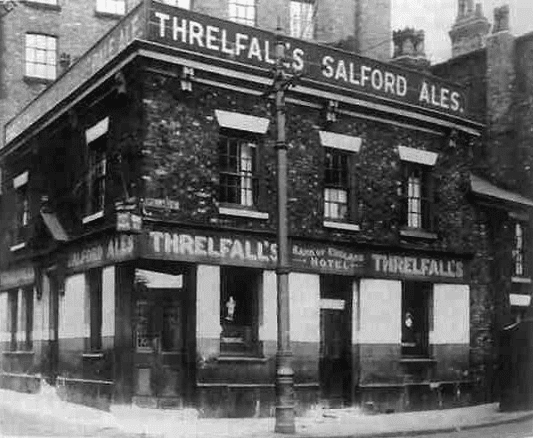
The first bank in Manchester was established in 1771. Located on Bank Street, it was named the “Manchester Bank of Byrom, Allen, Sedgwick, and Place,” after its founders.
One of the bank’s major clients was a company called “Livesey, Hargreaves & Co,” which specialised in cotton production. This company was one of the largest enterprises during the early stages of the Industrial Revolution, operating factories in Preston, a mill in Clitheroe, coal mines, and several facilities in Manchester and London. The company regularly took loans from Manchester’s first bank to support its industrial activities. However, in 1788, the company went bankrupt, leaving the bank with over £1.5 million in unpaid debts. Unsurprisingly, the failure of one of the city’s largest companies caused Manchester’s first bank to collapse just two days later.
Early Banks Operating in Manchester
After the closure of Manchester’s first bank, John Jones, a banker and tea merchant, advanced the city’s banking sector. In 1784, another bank, “Heywood’s Bank,” was opened. Initially located on King Street, it was later moved to a building on St. Ann’s Square.
By the 19th century, the number of banks in Manchester began to grow rapidly. In 1827, “Brooks Bank” was established on Brown Street and later moved to Lombard Chambers. Other notable banks followed: the “Manchester Bank” in 1829, the “Manchester and Liverpool District Bank” in 1834, and the “Manchester and Salford Bank” in 1836.
The “Manchester and Salford Bank,” in particular, played a crucial role in financing various industries, including textile mills, railways, and shipping. Its development reflected the city’s growing economy and highlighted the importance of a robust banking sector in supporting industrial progress.
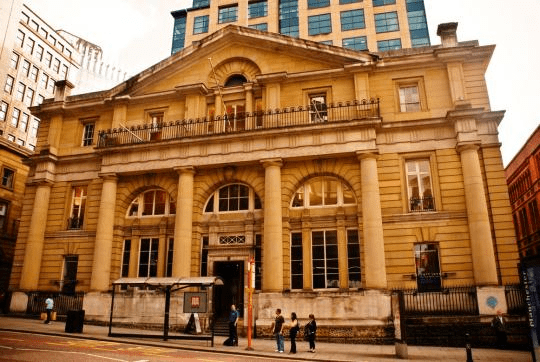
In 1845, the “Bank of England” opened a branch on King Street in Manchester. The rapid development of banking in Manchester and the opening of new banks significantly contributed to the city’s economic prosperity. However, the rise of national banking networks gradually overshadowed Manchester’s local banks. With their broader reach and resources, national banks offered stiff competition to smaller regional institutions. Over time, Manchester’s banking landscape evolved as national banks expanded their presence in the city.
Several early banks also contributed to Manchester’s growth and economic development:
- Williams & Glyn’s
- Lancashire & Yorkshire Bank
- William Deacon’s Bank
- Manchester & County Bank
The Industrial Revolution’s Impact on Banking in Manchester
The Industrial Revolution, which transformed Manchester into a manufacturing powerhouse, brought rapid industrialisation and a sharp increase in demand for financing and capital. The Manchester Bank and other early institutions experienced unprecedented growth in business, driving them to innovate and expand their services.
As the national banking networks emerged and modern banking practices took hold, Manchester’s financial sector adapted to these changes. Today, banking remains a vital part of the city’s economic success, continuing to provide essential financial services to businesses and individuals alike.