

Libraries have always been a cornerstone of society, serving as hubs for the dissemination and preservation of knowledge. Over the centuries, they have provided communities with access to diverse information sources and significant cultural enrichment. The city of Manchester, with its rich industrial heritage, embraced this tradition in the 19th century, leading to the establishment of the first public library. Let’s delve into the fascinating story of the Manchester Central Library. Next on manchester1.one.
The Predecessor of the Manchester Central Library
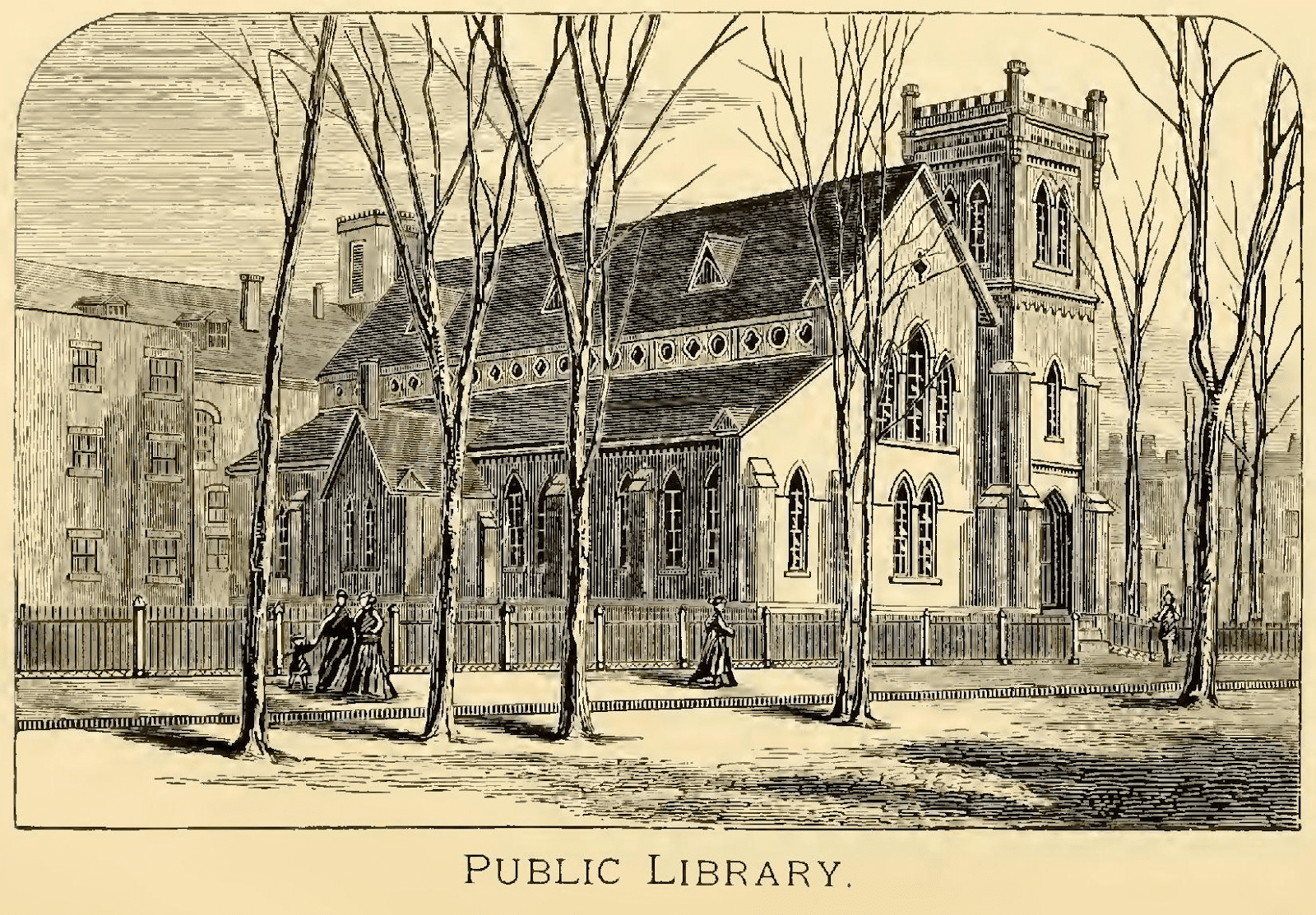
The roots of library culture in Manchester date back to 1844 with the creation of the Athenaeum Library. Located on Athenaeum Street, this was one of the city’s first libraries, founded by several prominent local figures. Funded entirely by donations and book contributions, it operated with the help of dedicated organisers, including a president, vice-president, three directors, a secretary, a treasurer, and a librarian.
However, this library was not free or fully public. Access required an annual membership fee of three US dollars. Its modest collection, built largely through local donations, consisted of a reading room, a small museum, and a humble array of books.
The Initiative to Establish a Public Library
Recognising the significance of libraries for the general public and the barriers posed by membership fees, Manchester’s city officials decided to act. In 1854, Mayor Frederick Smith spearheaded the establishment of the city’s first public library. The entire Athenaeum Library collection, comprising approximately 200 volumes, was officially transferred to the city. The new library opened at 6 Patten Block on Elm Street, near the Town Hall.
Interest in the library grew rapidly, attracting increasing numbers of Mancunians eager to expand their knowledge. Within a short time, the collection had expanded to 3,000 books. However, disaster struck in 1856 when a fire engulfed the library building, destroying most of its holdings. Only 600 books, borrowed by residents, were saved.
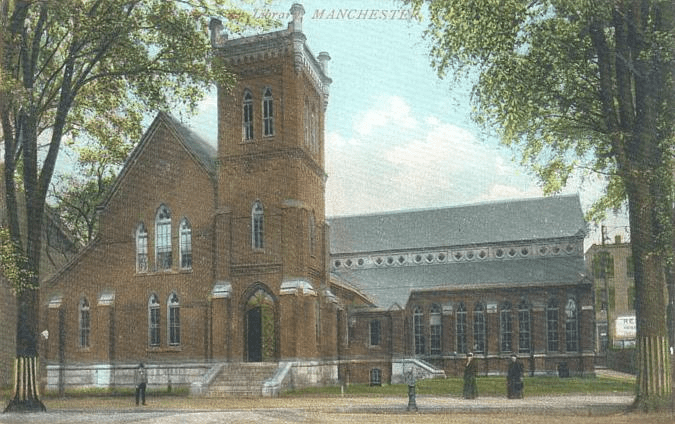
A temporary public library was subsequently established in Smith Block. It wasn’t until 1871 that a new permanent building for the library was constructed on Franklin Street.
Challenges Faced by the Library in Its New Building
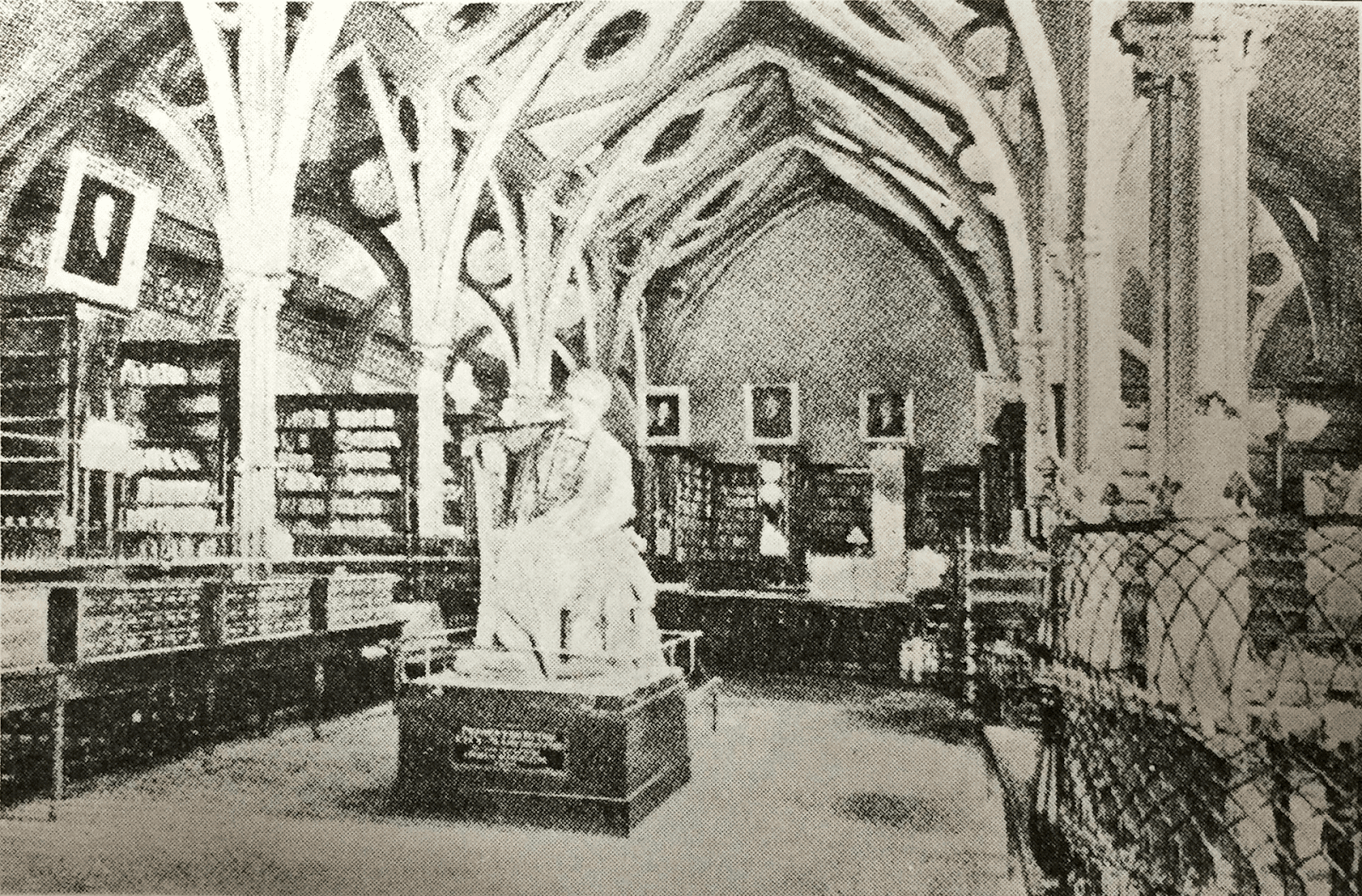
Despite the new facility on Franklin Street, residents were largely dissatisfied. Its dark and unwelcoming appearance drew criticism, and changes in the book-lending system caused further discontent. Visitors had to adhere to strict borrowing schedules and could only access books on designated days. Additionally, a high wire fence separated visitors from the bookshelves, restricting direct access to library materials and requiring patrons to rely on staff to retrieve books for them—often resulting in long waits and incorrect selections.
These challenges attracted widespread criticism from the library’s users. Over time, however, the facility underwent expansions and improvements. By the late 19th and early 20th centuries, new sections were added to accommodate the growing collection, and a card-catalogue system was introduced for better organisation.
The library faced another obstacle when termites infested its wooden floors. This issue was resolved with the installation of cement flooring.
As the library expanded, additional branches and departments were established throughout Manchester in the early 20th century. By the 1910s, it became evident that a larger, more centralised facility was required. The library eventually moved to the Carpenter Building.
The 20th Century: A Period of Innovation
The 20th century marked a period of rapid growth and technological advancements for the Manchester Public Library. During this era, the library introduced several new services and innovations, including:
- Mobile book services
- Collections of large-print books
- Photocopying facilities
- Bookmobiles
- Online catalogues
- Digital libraries
These developments positioned the library as a leader in the delivery of knowledge and information to the residents of Manchester.
A Lasting Legacy
For decades, the Manchester Central Library has played a vital role in providing access to knowledge, serving as a hub for cultural enrichment and leisure. Despite facing numerous challenges throughout its history, the library remains a crucial centre for learning and discovery in the 21st century, much as it was in its early years.