

John Knowles was a true innovator in the cultural sphere and a renowned Manchester businessman of the 19th century. He gained wide recognition as the owner of the Royal Theatre on Peter Street from 1844 to 1875. In addition to managing the theater, Knowles also operated a business manufacturing marble fireplaces. These were only some of his ventures. His life, activities, and contributions to Manchester’s business landscape are explored in detail below. Next on manchester1.one.
Early Life of Businessman John Knowles
John Knowles was born in 1810 on Chapel Street, London Road, Manchester. He grew up in a well-to-do family, as his father was a successful businessman involved in coal trading and marble fireplace manufacturing. From his father, Knowles inherited an entrepreneurial spirit.
Unfortunately, little is known about his early years, and even the exact date of his birth remains uncertain. Historians suggest he might have been born in 1811. However, what is clear is that the Royal Theatre in Manchester was his most significant business venture. He devoted a significant portion of his life to this endeavor.
Owner of Manchester’s Royal Theatre
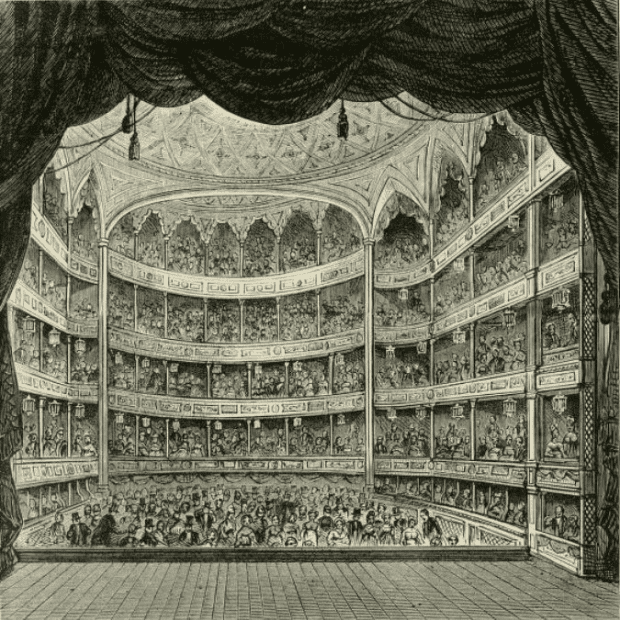
Knowles’s career in Manchester’s cultural business began when the Royal Theatre faced a decline. He recognized its potential to remain a cultural hub for the city and took the initiative to restore its former glory. To achieve this, Knowles formed a shareholder company, showcasing his skills as a capable entrepreneur and authoritative theater manager.
In the challenging early 19th century, Knowles overcame numerous obstacles and economic crises facing the Royal Theatre. After the 1844 fire that completely destroyed the building, he undertook its restoration single-handedly. Knowles wasn’t just a businessman—he was a passionate supporter of theatrical arts and was eager to develop Manchester’s cultural and theatrical life.
Thanks to Knowles, the Royal Theatre found a new home on Peter Street. Constructing the new Royal Theatre cost him £23,000. The theater had a seating capacity of around 2,500 and included fire prevention measures, such as a rooftop reservoir capable of holding 20,000 gallons of water.
The theater’s revival under Knowles’s management was a resounding success. Its schedule was packed; by the mid-19th century, it hosted approximately 157 performances per season, sometimes featuring two or even three plays in a single evening.
Knowles also commissioned a red marble statue of Shakespeare to adorn the theater’s entrance. The statue was considered the best outdoor sculpture in the city.
In 1875, after decades of success, Knowles sold the theater for £50,000.
Other Ventures Beyond the Royal Theatre
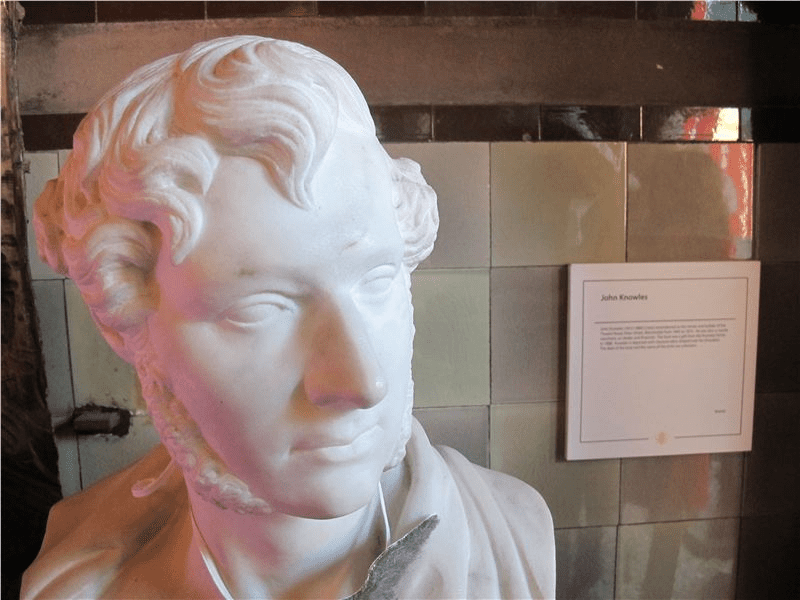
Knowles’s activities extended beyond managing the Royal Theatre. A savvy businessman, he was skilled in finance and often provided loans to support local businesses. He also leased His Majesty’s Theatre in London’s Haymarket district and frequently contributed to local charitable organizations.
The Royal Theatre remained his most significant and impactful venture for Manchester residents. However, he also continued his father’s business, producing marble fireplaces, chimneys, tombstones, and monuments.
John Knowles passed away in 1880, leaving behind a legacy as one of Manchester’s most successful cultural leaders. He is remembered for reviving the city’s theater scene and making the Royal Theatre an iconic part of Manchester’s cultural heritage.