

It may be hard to imagine today, but until 1982, Manchester boasted its very own port. Established in 1894 with the opening of the Manchester Ship Canal, the port became a crucial artery for trade. This harbour transformed Manchester into an inland seaport capable of competing with coastal cities like Liverpool. The port has a rich history, deeply intertwined with the city’s economic and industrial growth. Next on manchester1.one.
The Establishment of the Port of Manchester
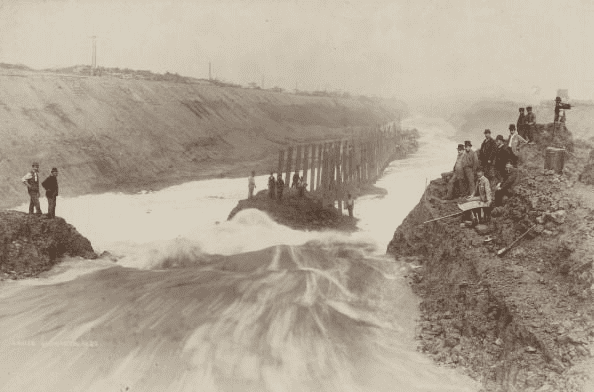
The Port of Manchester was founded in the winter of 1894, just months before the opening of the Manchester Ship Canal, the city’s main waterway. Interestingly, the port itself was not located within Manchester but in the nearby area of Salford.
Situated just 3.74 miles from Liverpool’s Herkulanum Dock and 2.4 miles from Garston Port, the opening of the ship canal turned Manchester from a landlocked city into a significant seaport. At its peak, the port was the third busiest in the United Kingdom, reflecting Manchester’s rapid economic and industrial expansion. Millions of tonnes of cargo were handled annually, driving the city’s economic growth by facilitating the import of raw materials such as cotton, timber, and grain and the export of industrial goods, particularly textiles.
In the late 19th century, the port of Manchester became a driving force for economic and industrial progress. It enabled swift and cost-effective transportation of goods to inland cities like Leeds and Birmingham, revolutionising trade routes in Britain.
The Infrastructure of the Port of Manchester
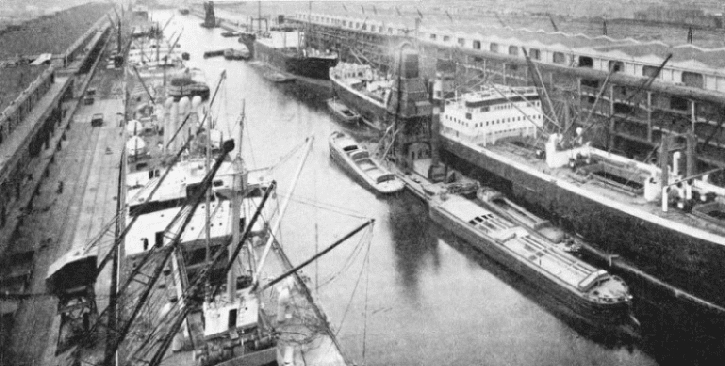
The Port of Manchester was significantly larger than most other ports in Britain at the time, showcasing a marvel of 19th-century engineering. The port featured vast docks, extensive warehouses, and a dedicated railway infrastructure, ensuring the seamless transportation of goods across the country. Stretching for several miles, the docks had deep-water berths capable of accommodating large ocean-going vessels. By the late 19th century, the port was equipped with state-of-the-art loading and unloading machinery, making it a formidable competitor to nearby ports.
The First Ship to Arrive at Manchester’s Harbour
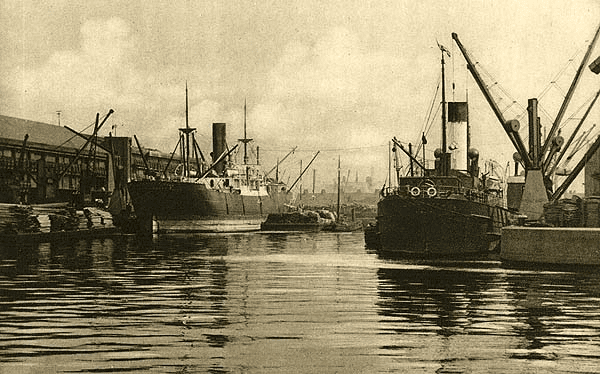
The first ship to arrive at the Port of Manchester docked on 1 January 1894, the day of the port’s opening. This steamer, named Pioneer, belonged to the Co-operative Wholesale Society and delivered a cargo of sugar from Rouen, France.
Initially, the Port of Manchester was built to compete with older, more established ports. This ambition stemmed from resistance from powerful shipping cartels known as “The Punishers”, who controlled much of the maritime trade. Despite these challenges, Manchester’s trade steadily grew. By 1895–1896, the port handled 121,336 bales of cotton imported from the United States, a figure that rose to 377,264 bales by 1907–1908.
In addition to cotton, other significant goods transported through the port in the early 20th century included timber and grain. Grain imports, for instance, rose from 35,000 tonnes in 1895 to 406,000 tonnes by 1907, reflecting the port’s expanding influence.
This surge in trade established the Port of Manchester as one of the most important customs ports in the United Kingdom by the early 20th century. The peak year for the volume of goods handled was 1959. However, by the 1960s, the port began a steady decline.
The decline of the Port of Manchester was due to several factors, including the growing size of ocean-going vessels, many of which could not navigate the narrow Manchester Ship Canal. Changes in global trade patterns and the decline of the UK’s manufacturing sector also contributed to reduced activity. By the 1970s, much of the port’s infrastructure was outdated, unable to accommodate modern shipping needs.
The final blow came in the early 1980s, with the closure of Manchester’s docks. The official closure of the port in 1982 marked the end of an era.
The story of the Port of Manchester did not end with its closure. Over subsequent decades, the area underwent significant transformation. The redevelopment of the former docks into Salford Quays became one of the most successful urban regeneration projects in the UK.
Today, the area is home to MediaCityUK, a major media hub, alongside residential, commercial, and cultural landmarks such as The Lowry and Imperial War Museum North. Though the port is long gone, the site has been reborn as a vibrant centre of diversity, evolving from an industrial and trade hub into a thriving cultural district.